
Creativity is perhaps the most defining attribute of humanity. It is what distinguishes us from every other living species. Human beings do more than merely survive—we compose music, paint masterpieces, write poetry, perform theatre, tell stories, and transform imagination into culture. Art is not simply an expression of beauty; it is the language of the human spirit, the archive of civilization, and the enduring witness of history.
Today, however, the artistic landscape stands at the threshold of an extraordinary transformation. The rapid advancement of Artificial Intelligence (AI) has introduced a new creative paradigm in which machines are capable of generating paintings, composing music, writing poetry, producing films, and creating visual narratives that increasingly resemble human artistic expression.
This raises an inevitable question: Is Artificial Intelligence a threat to art, or is it the gateway to an entirely new era of creativity?
History offers a reassuring perspective. The relationship between technology and art has rarely been adversarial; more often, it has been transformative. The invention of the printing press democratized literature. The arrival of photography was once predicted to render painting obsolete. Instead, it liberated artists from realism and gave birth to revolutionary movements such as Impressionism, Cubism, and Abstract Expressionism. Likewise, digital technology reshaped music, cinema, and publishing, expanding artistic possibilities rather than diminishing them.
Artificial Intelligence represents the latest chapter in this long history of creative evolution.
Unlike conventional software, modern AI is capable of understanding language, interpreting images, composing melodies, generating videos, and producing sophisticated creative content from simple textual instructions. Within seconds, a brief prompt can become a compelling illustration, a book cover, an advertising campaign, or even a cinematic sequence. Tasks that once demanded weeks of painstaking effort can now be prototyped in a matter of minutes.
Such efficiency is undeniably remarkable.
Yet art has never been defined solely by speed or technical perfection.
When a poet writes about love, they do far more than arrange beautiful words. They translate memory, longing, grief, hope, and lived experience into language. When a painter applies colour to a canvas, every brushstroke reflects personal history, cultural identity, and emotional depth. While machines can process immense quantities of data and recognize patterns with extraordinary precision, they do not experience joy, sorrow, fear, or love. AI generates through computation and probability; human beings create through consciousness, empathy, imagination, and lived reality.
It is precisely this emotional intelligence that continues to define the essence of human artistry.
Nevertheless, ignoring AI is no longer a viable option. Across the globe, leading filmmakers, architects, designers, publishers, advertising agencies, and game developers are embracing AI as a creative collaborator. From research and ideation to storyboarding, visual effects, background design, sound production, and post-production workflows, AI is dramatically accelerating creative processes. This allows artists to devote more time to what matters most: originality, aesthetic refinement, and meaningful storytelling.
In this context, AI should not be viewed as the artist's competitor but as a powerful creative partner.
Like every technological revolution, however, AI introduces profound challenges alongside unprecedented opportunities.
Among the most pressing concerns is the future of creative employment. If AI can generate illustrations, graphic design
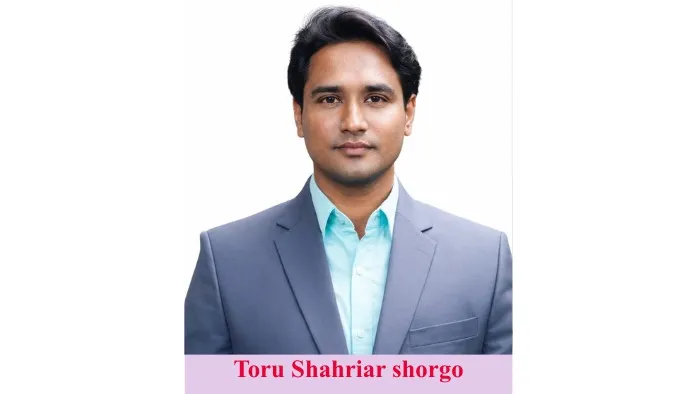
Writer: Faculty & Researcher, Dhaka International University.