

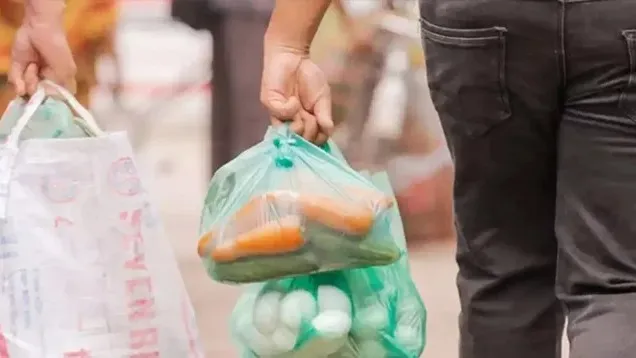
The use of non-biodegradable banned polythene bags is re-emerging in markets across Bangladesh, prompting authorities to intensify mobile court drives and take stricter legal action against their production, transportation, marketing and use.
Authorities are stepping up monitoring to shut down illegal polythene factories and eliminate the use of such bags in fresh markets. Relevant departments and agencies have also been instructed to take necessary measures to protect the coral reefs of Saint Martin’s Island, Bangladesh’s only coral island, which face serious risks from plastic waste accumulating along the coast and seabed.
Department of Environment Deputy Director Sabrin Sultana told BSS that mobile court operations were being intensified nationwide to stop the production, transportation, marketing and use of banned polythene.
“Strict legal measures are being taken, and the campaign to protect the environment will continue forcefully,” she said.
Officials concerned said the use of banned polythene was increasing again in markets across Dhaka and other parts of the country despite the restrictions. Grocery shops, fresh markets, fish markets and fruit shops have increasingly returned to using polythene bags.
The Ministry of Environment, Forest and Climate Change and other relevant agencies have been directed to perform their respective duties properly to prevent the spread of polythene and plastic waste.
Experts warn that the indiscriminate disposal of polythene and plastic waste degrades soil and water quality and blocks urban drainage systems, causing severe waterlogging.
Microplastics formed as plastic breaks down can enter the human body through fish and agricultural food products, potentially posing health risks.
They stressed that raising awareness among traders, consumers and the general public, alongside stronger enforcement, is essential to reducing the use of polythene.
Professor Dr Tanveer Ahmed of the Department of Civil Engineering at Bangladesh University of Engineering and Technology (BUET) told BSS that polythene production must be stopped to protect the environment.
He said the Department of Environment needed to play a stronger role in enforcing the restrictions. Local government agencies could also make a significant contribution by ensuring the proper collection and management of polythene and plastic waste.
Polythene