

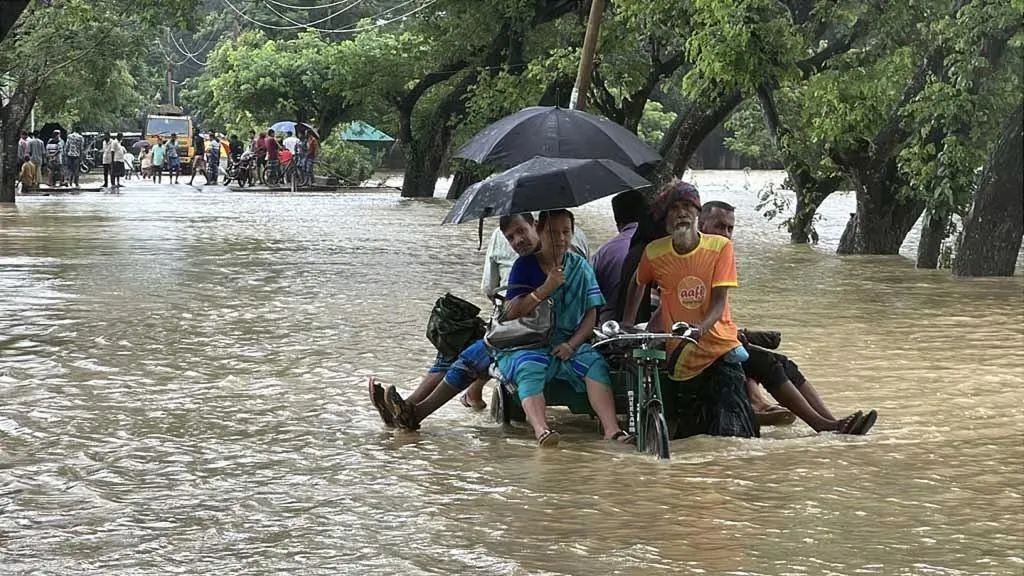
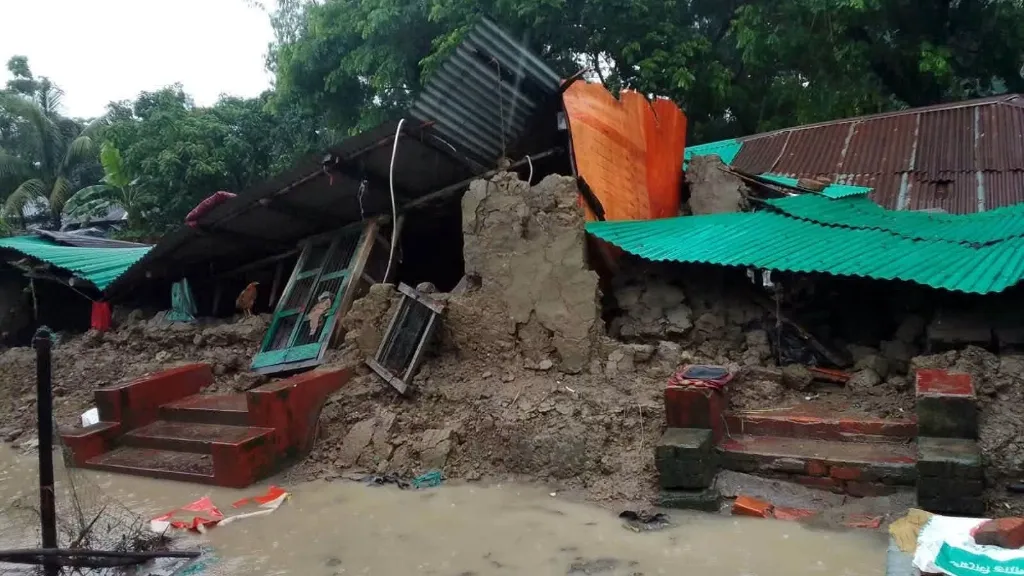
Continuous heavy rainfall over the past several days, upstream water flows, rising river levels, and tidal surges have triggered a severe flood situation in the southeastern and northeastern regions of Bangladesh. The death toll from floods and landslides in five districts of Chattogram Division has risen to 39. Cox’s Bazar has recorded the highest number of fatalities, with 23 deaths, including 13 Rohingya refugees. At the same time, at least 928,000 people have been affected in five districts of Chattogram Division. Flooding has also spread to Sylhet, Sunamganj, Moulvibazar, Habiganj, Feni, and several other districts.
An analysis of the latest situation reports from the Ministry of Disaster Management and Relief, Flood Forecasting and Warning Centre (FFWC), Bangladesh Meteorological Department, district administrations, and the Water Development Board shows that millions of people across at least 12 districts are still struggling amid floods and waterlogging. While some areas are facing landslides, others are being inundated due to embankment breaches. Road communication has been disrupted in many areas, making relief distribution in remote locations a major challenge.
Chattogram and Cox’s Bazar Worst Hit: In Chattogram district, around 189,000 families across 16 upazilas have been affected. A total of 176 unions and municipalities have been flooded. As many as 673 shelters have been opened, where nearly 24,000 people have taken refuge.
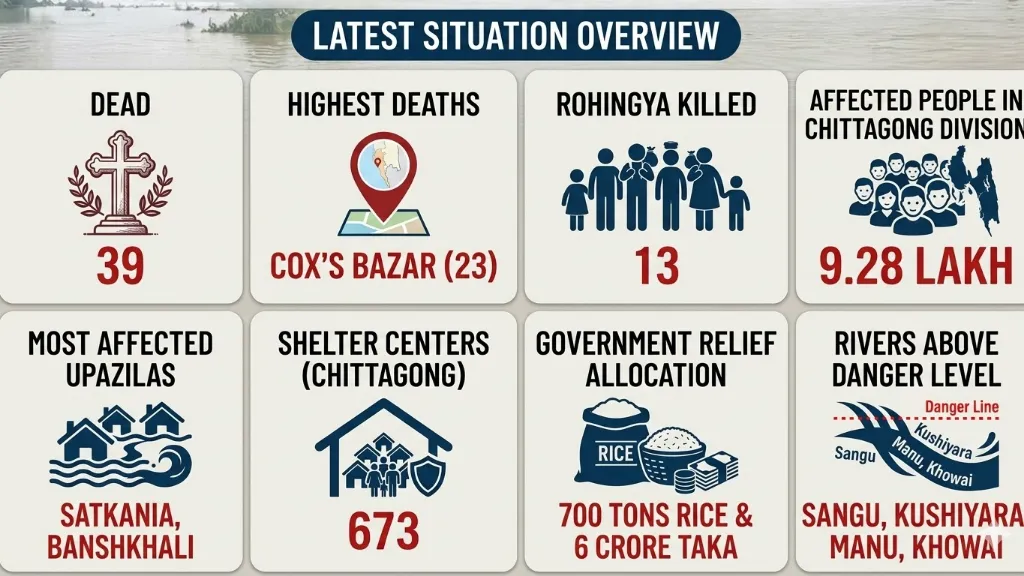
The situation is particularly critical in Satkania and Banshkhali. More than 500,000 people in the two upazilas are reportedly stranded by floodwaters. Rising water levels in the Sangu and Dolu rivers, combined with upstream flows from hills, have submerged homes, agricultural lands, fish farms, markets, and rural roads. In many areas, boats have become the only means of transportation. Disruptions to electricity and mobile networks have made rescue operations and accurate damage assessments more difficult.
In Cox’s Bazar, nearly 500,000 people have been affected. Chakaria and the Matamuhuri area are among the worst-hit locations. Eighteen unions and one municipality have been flooded. The crisis has intensified due to shortages of safe drinking water, difficulties in cooking, and lack of adequate shelter.
New Crisis in the Northeast: In Habiganj, a protective embankment along the Khowai River has collapsed, flooding at least 30 villages in Sadar, Bahubal, and Baniachong upazilas. Around 30,000 people have been affected, while road connectivity has severely deteriorated.
In Moulvibazar, water levels in the Manu and Dholai rivers are flowing significantly above danger levels. More than 4,000 families in 17 unions have been affected. One elderly person has died in the district.
In Sylhet and Sunamganj, water levels in the Surma and Kushiyara rivers have slightly decreased, but the water level of the Sari-Gowain River has risen. The Water Development Board warned that the situation could worsen rapidly if heavy rainfall continues upstream.
Four Rivers Still Flowing Above Danger Levels: The Flood Forecasting and Warning Centre said water levels at six monitoring points of the Sangu, Kushiyara, Manu, and Khowai rivers are still flowing above danger levels. Meanwhile, several monitoring stations of the Teesta, Surma, Kushiyara, Someshwari, Muhuri, and Matamuhuri rivers are near alert levels.
If heavy rainfall continues in the Chattogram region over the next 24 hours, there is little possibility of significant improvement in the flood situation. Authorities have also warned of the possibility of new flooding in Feni.
The Bangladesh Meteorological Department and the Regional Integrated Multi-Hazard Early Warning System (RIMES) said that due to active monsoon conditions and a low-pressure system over central India, heavy to very heavy rainfall may continue until July 12 in Chattogram, Cox’s Bazar, Bandarban, Rangamati, and Khagrachhari. These areas also remain at high risk of landslides.
Water and climate expert and Emeritus Professor at BRAC University, Dr. Ainun Nishat, said Bangladesh’s flood situation is no longer only a problem of river overflow; it is increasingly linked with changing patterns of extreme weather.
“Short-duration intense rainfall, upstream flows from hills, and weak drainage systems are combining to increase the scale of damage. To reduce future flood risks, Bangladesh needs stronger river management, better land-use planning, and greater local-level adaptation capacity,” he said.
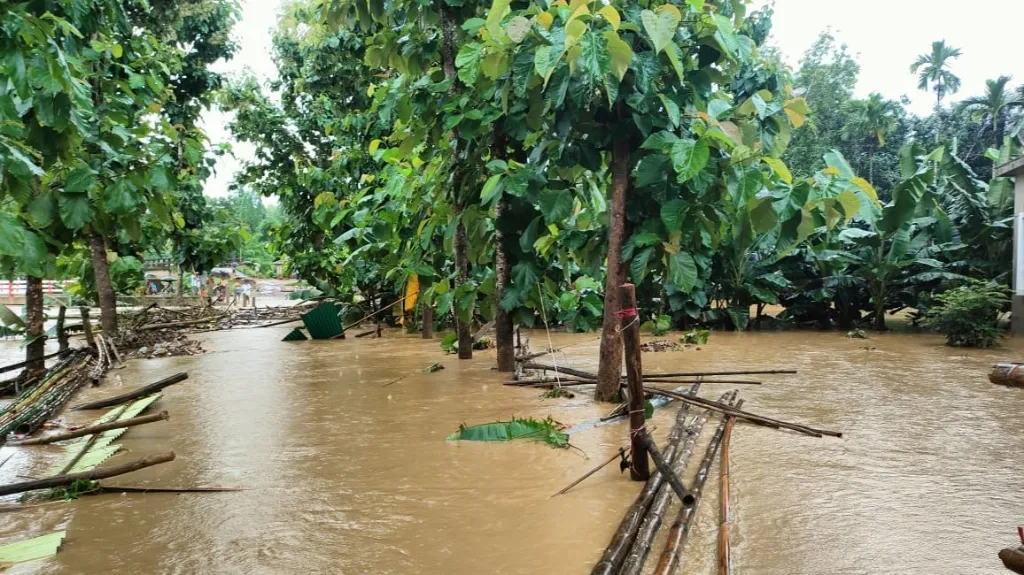
Agriculture, Fisheries and Public Health Under Threat: Thousands of hectares of agricultural land, fish farms, vegetable fields, and rural infrastructure have been damaged by floodwaters. According to a preliminary assessment by the Satkania administration, nearly half of the agricultural land in the upazila has been affected. However, the actual extent of damage to the fisheries sector is yet to be determined.
Meanwhile, shortages of safe drinking water, the collapse of sanitation systems, and the rising risk of waterborne diseases have created additional concerns. Many families in affected areas are still struggling to access clean water, infant food, and essential medicines.
Relief Operations Underway, but Reaching Remote Areas Remains a Challenge: The government has allocated 700 tonnes of rice and Tk 60 million for flood victims. So far, 300 tonnes of rice, Tk 43 million, and dry and cooked food have been distributed. However, local administration officials said many remote areas remain beyond reach due to damaged roads and disrupted communication networks.
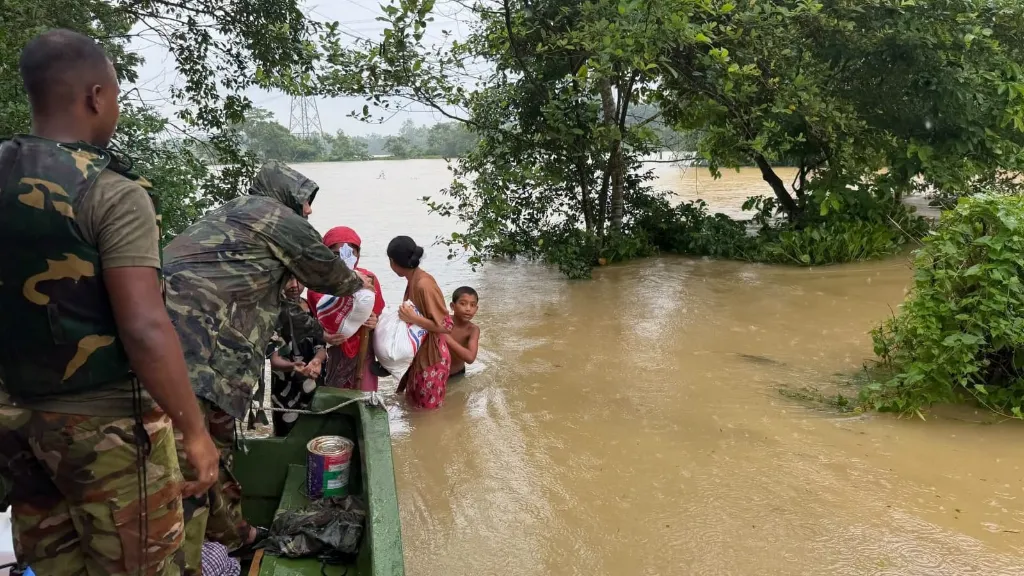
The Bangladesh Army has prepared to deliver relief supplies to affected communities using speedboats.
Climate and development expert and Chairman of the Bangladesh Unnayan Parishad, Dr. Qazi Kholiquzzaman Ahmad, said Bangladesh cannot remain limited to post-disaster relief activities in addressing climate change impacts.
“Long-term adaptation planning, strengthening local community capacity, and ensuring climate finance are now the most important priorities. Those who have contributed the least to climate change are suffering the greatest impacts — this remains a major question of climate justice,” he said.
The New Reality of Climate Risks: The latest disaster has once again demonstrated that extreme rainfall, flash floods, landslides, and coastal flooding are no longer isolated incidents for Bangladesh. Climate scientists say that while a single rainfall event cannot be directly attributed solely to climate change, extreme weather events are becoming more frequent and intense.
Bangladesh’s contribution to global greenhouse gas emissions is negligible, yet the country is among those facing the greatest impacts of climate change. The recent disaster is therefore not merely a natural catastrophe; it highlights the urgent need to strengthen disaster preparedness, improve adaptation capacity, address infrastructure vulnerabilities, and secure international climate financing.