

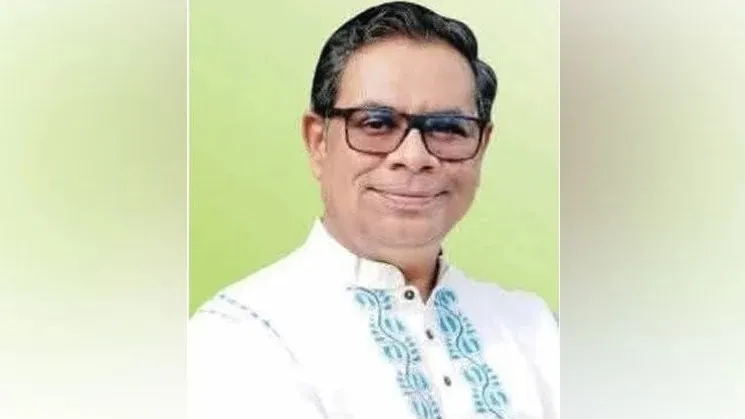
State Minister for Health and Family Welfare Dr MA Muhit today strongly stressed stopping food adulteration and corruption immediately to save people's life, observing these two as the biggest obstacles to public health.
"The growing number of illnesses and deaths cannot be stopped merely by procuring dialysis machines or building hospitals unless safe and adulteration-free food is ensured for the people," he said.
Dr Muhit made the remarks while addressing a discussion as the chief guest at Bangladesh Small and Cottage Industries Corporation here, marking the World Iodine Day this morning.
BSCIC, GAIN, Nutrition International and the Ministries of Industries and Health and Family Welfare jointly organised the event.
The state minister said the key focus of the government's election manifesto for the health sector is prevention of diseases.
Dr Muhit said dialysis machines and specialised hospitals are being established in different districts of the country, but the number of patients suffering from kidney and other chronic diseases would continue to rise unless food adulteration is curbed.
He called for a stronger role by all relevant agencies, including the Directorate of National Consumers' Right Protection, in preventing food adulteration.
Issuing a stern warning against corruption in the health sector, Dr Muhit said, "The pattern of mismanagement and corruption of the recent past must be broken and not a single penny allocated for people's healthcare would be allowed to be siphoned off through corruption".
Referring to tenders worth Taka 16,000 crore expected to be floated in the health sector within the next few days, he said the government and Prime Minister Tarique Rahman would not tolerate corruption "in the slightest."
The state minister gave a firm assurance that strict legal action would be taken against corruption irrespective of how powerful the individuals involved might be.
Appreciating the effectiveness of efforts to eliminate iodine deficiency, Dr Muhit said concerted efforts in previous years had helped ensure that iodised salt reached people's doorsteps, significantly reducing the prevalence of intellectual disabilities caused by iodine deficiency.
However, according to a 2026 survey, around 12 percent of people in the country still consume non-iodised salt, he said.
He stressed the need for targeted research focusing on this group- roughly one in every eight people- to ensure that iodised salt reaches them.
The state minister also called on relevant institutions to pay greater attention to bringing children with disabilities, particularly those affected by malnutrition, into mainstream nutrition and health programmes.
Industries Ministry Secretary Abdun Naser Khan, GAIN Country Director Rudaba Khondker, Nutrition International Country Director Dr AKM Musa and Bangladesh Salt Mill Owners Association President Nurul Kabir attended the event as special guests.
BSCIC Chairman Benazir Ahmed chaired the programme.