

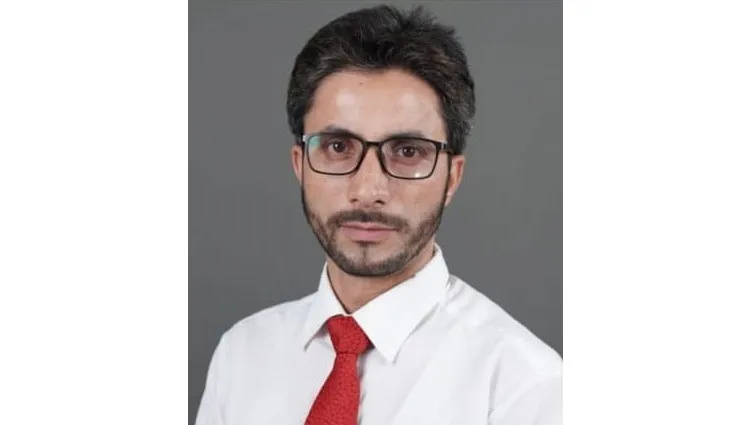
Naseer Ud Din Sofi
South Asia is a region of remarkable cultural diversity, historical interconnectedness, and religious plurality. Home to multiple faiths, languages, ethnic communities, and political traditions, the region represents both the possibilities of peaceful coexistence and the complexities of managing diversity in modern nation-states. From India and Pakistan to Bangladesh, Nepal, and Sri Lanka, political developments, public protests, and debates over religious identity continue to shape the relationship between citizens and the state. These developments raise an important question: how can South Asian societies protect democratic freedoms while strengthening religious tolerance, social harmony, and mutual respect?
Public protest is an essential feature of democratic life. It enables citizens to express dissatisfaction, challenge administrative decisions, demand accountability, and draw attention to social and economic inequalities. When institutions fail to respond adequately to public concerns, demonstrations often become a means through which marginalised groups make their voices heard. Students, workers, farmers, women, religious minorities, and civil society organisations have all used collective action to demand justice and institutional reform. Protests, therefore, should not automatically be interpreted as signs of political disorder; they may also indicate an active citizenry seeking meaningful participation in public affairs.
Political Instability and the Voice of the Public
Political uncertainty across South Asia emerges from a combination of factors, including unemployment, economic inequality, corruption allegations, institutional mistrust, demands for political representation, and disagreements over governance. Although each country has its own political history and institutional framework, a common regional challenge is the need to make democratic institutions more responsive to citizens' expectations.
Young people faced with concerns about employment, education, economic mobility, and political participation, many young citizens increasingly expect transparency and accountability from public institutions. Such developments underline the importance of inclusive governance and meaningful dialogue between state institutions and society. Nevertheless, political protest is neither uniform in its objectives nor identical in its consequences. Some movements seek administrative reform, others demand changes in political leadership, while still others mobilise around questions of identity, representation, or economic justice.
Political parties and influential public figures also have a responsibility to avoid rhetoric that intensifies social divisions. When legitimate disagreement is transformed into hostility towards particular communities, political competition can weaken the social trust on which democratic life depends. Public debate must remain open to criticism without reducing political opponents or minority groups to enemies.
Religious Tolerance and the Politics of Identity
Religious diversity has profoundly influenced South Asia's intellectual, cultural, and social history. Hinduism, Islam, Buddhism, Sikhism, Christianity, Jainism, and numerous indigenous and local traditions have contributed to the region's cultural heritage. Yet religious diversity does not automatically guarantee social harmony. Religious identities can become politically contentious when they are associated with unequal access to rights, competing historical narratives, exclusionary nationalism, or struggles over public recognition. In such circumstances, religious affiliation may be used to mobilise electoral support or establish boundaries between insiders and outsiders. The resulting polarisation can undermine confidence between communities and make minorities feel increasingly vulnerable.
“Religious tolerance must therefore be understood as more than the passive acceptance of another person's beliefs. It involves recognising the equal dignity of individuals, protecting freedom of conscience, respecting different forms of worship, and rejecting discrimination based on religious identity. It also requires the willingness to defend the rights of people whose beliefs differ from one's own”..
The Vulnerability of Religious Minorities
The condition of religious minorities offers an important measure of the strength of a society's democratic institutions. Constitutional guarantees are essential, but their effectiveness depends on implementation, access to justice, impartial policing, and the willingness of public authorities to respond to discrimination and violence. Where individuals fear harassment, exclusion, or intimidation because of their religious identity, the principle of equal citizenship becomes difficult to realise. Rumours, inflammatory speeches, misinformation, and unverified social media posts can intensify tensions, particularly during elections, demonstrations, or periods of political uncertainty. A single incident may be presented as evidence against an entire community, transforming an individual dispute into a wider social conflict.
The response must be grounded in evidence, accountability, and the rule of law. Allegations of religiously motivated violence or discrimination should be investigated impartially, perpetrators should be held accountable through lawful procedures, and affected communities should receive appropriate protection. Equally important is the rejection of collective blame. The actions of individuals must not be attributed indiscriminately to a whole religious group. Governments, courts, educational institutions, media organisations, and community leaders all have roles to play in preventing discrimination. Their responsibility is not merely to manage conflict after it occurs, but also to cultivate the social conditions in which hostility is less likely to take root.
The Role of Media and Digital Platforms
In contemporary South Asia, the media occupies a powerful position in shaping public perceptions of political protest and religious difference. Responsible journalism can investigate abuses of authority, amplify marginalised voices, challenge misinformation, and create opportunities for informed public discussion. Sensational reporting, however, can deepen divisions when it privileges provocative headlines over verified evidence or presents complex conflicts through simplistic religious or political categories. Digital platforms have further complicated this landscape. They enable citizens to organise, document events, and circulate information beyond traditional media structures. At the same time, manipulated images, misleading videos, fabricated claims, and inflammatory messages can spread rapidly, sometimes before journalists or authorities have established the facts.
From Tolerance to Equal Citizenship
South Asia stands at an important intersection of democratic aspirations, political contestation, and religious diversity. Public protests reveal the demands and frustrations of citizens, while debates over religious tolerance expose the continuing challenge of building societies in which difference does not become a basis for exclusion. Neither political stability nor social harmony can be sustained through coercion alone. Both require public trust, accountable institutions, equal rights, and a willingness to listen to dissenting voices. Religious tolerance should not be treated as a favour extended by a majority to a minority. It is a democratic and ethical commitment grounded in human dignity and equal citizenship. Similarly, peaceful protest should not be viewed merely as a disruption of public life; it can serve as a legitimate means of expressing grievances and demanding reform. The way forward lies in strengthening institutions that protect rights, encouraging political dialogue, promoting responsible journalism, and investing in education that cultivates critical thinking and mutual respect. South Asia's diversity need not be a source of permanent division. With principled leadership and active civic participation, it can become a foundation for democratic resilience and shared prosperity.
The central challenge is not to create societies without disagreement, but to build societies in which disagreement does not destroy coexistence. The future of South Asia will depend, in significant measure, on its ability to uphold this principle in both public policy and everyday life.
(The Writer is Assistant Professor, English, Desh Bhagat University, Mandi Gobindgarh)