

A young agricultural entrepreneur has opened a new possibility for farming in the hills of Khagrachhari by successfully cultivating black rice on an experimental basis, raising hopes of introducing a high-value, nutrient-rich crop in the region.
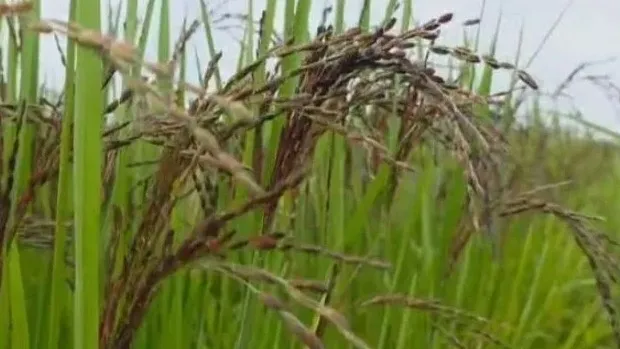
Enamul Haque Enam, a farmer from Golak Pratimachhara area of Panchhari upazila, has achieved the district's first success in growing black rice on his own farmland. The dark-coloured rice panicles swaying amid the lush green paddy field have become a distinctive sight, symbolising fresh possibilities for agricultural diversification in the hill district.
Inspired by the crop's market value and nutritional benefits, Enamul collected black rice seeds from Bogura at Taka 500 per kilogramme. He then prepared a seedbed on his land, transplanted the seedlings and carefully nurtured the plants.
His efforts have now begun to bear fruit, with dark-coloured panicles emerging from the plants. Their promising size and fullness have raised his expectations of a satisfactory harvest.
"I initially cultivated black rice on 12 decimals of my own land and have achieved encouraging results," Enamul told BSS, adding that the local agriculture office had provided him with necessary advice and support.
According to the young entrepreneur, black rice has relatively strong market demand and commands a higher price than ordinary rice. The rice is sold around Taka 250 to Taka 350 per kilogramme, making it an attractive option for farmers seeking profitable alternatives to conventional crops.
He said he would expand cultivation on a larger scale next year if the experimental plot produces the expected yield.
The initiative has drawn attention to the potential of introducing high-value crops in the remote agricultural areas of the Chattogram Hill Tracts, where suitable farming alternatives could help improve rural livelihoods.
Panchhari Upazila Agriculture Officer Rashidul Kabir said Enamul's initiative had produced promising results, describing black rice as a highly nutritious crop with considerable potential for the region.
"If black rice cultivation can be expanded in the remote hill areas, farmers will be able to earn more from their produce and receive better prices in the market," he told BSS.
He said the agriculture department was providing Enamul with technical advice and other necessary assistance to support the cultivation.
Assistant Agriculture Officer Nayontu Chakma, who is responsible for the agricultural block covering Enamul's farmland, said he had visited the field and inspected the black rice plants.
He said Enamul had brought seeds from a plainland district and successfully started cultivation in the hills. Wider adoption of the crop at the farmer level could open up new opportunities for agricultural production and increase farmers' earnings, he added.
The officials also highlighted the importance of providing farmers with technical guidance and encouraging them to explore promising crop varieties suited to local conditions.
Enamul's experiment has raised hopes that black rice cultivation could gradually spread beyond Panchhari to other parts of Khagrachhari and the wider Chattogram Hill Tracts.
For the young entrepreneur, the dark panicles ripening against a sea of green are more than an unusual agricultural sight. They represent the possibility of turning a small experimental plot into a profitable farming venture while inspiring other farmers to explore new opportunities.
If the initiative can be replicated successfully across the three hill districts, black rice could emerge as a promising addition to the region's agricultural diversity, offering farmers a potential source of higher income and consumers access to a distinctive, nutrient-rich food.